Helping bidders decide faster - not just find more tenders.
Bidders had every tender they needed — just not the confidence to act on it. I led the end-to-end redesign of Nexizo around a personalised News Feed that surfaces the sector context users were leaving the platform to find, turning hesitation into decisions and lifting engagement across the product.
28-41%
Engagement & retention lift
18%
Subscription & revenue signals
12-16%
Increased tender engagement rate
Overview
What is Nexizo?
Nexizo is a B2B SaaS platform designed to help SMEs, consultants, and procurement teams discover and track government tenders across India. With thousands of tenders published daily across central and state portals, the core value proposition was aggregation — bringing everything into one place. But users were leaving. Despite having access to the tenders they needed, they couldn't confidently decide which ones to pursue. The platform gave them data — not decisions.
Problem Statement
The real issue wasn't discovery — it was confidence.
Users were discovering tenders on Nexizo but making their actual decisions outside it — relying on Google News, government press releases, industry WhatsApp groups, and phone calls to understand sector context before bidding. Nexizo had the tenders. It didn't have the story around them.
No Contextual Signals
Government policy changes, sector-level regulatory updates, and department news directly affected bidding likelihood — but Nexizo showed none of it alongside the tender.
Confidence Gap
Users wanted to know: "Is this department actively releasing tenders right now? Are policies changing that affect this bid?" Without answers, they defaulted to caution.
Thin Subscription Value
Paying for a tender list felt interchangeable with free government portals. Users couldn't articulate what Nexizo gave them beyond aggregation.
Design Goal: Surface the sector context behind every tender, inside the platform, so bidders can decide with confidence instead of defaulting to caution.
Core User
Whom I designed for?
Through initial interviews and platform analytics, I identified two primary user archetypes with meaningfully different needs and mental models.
Tender Consultant
Pain Points
- Spends 2–3 hrs daily on news sites cross-referencing tender context
- No way to know if a department is in a "freeze" or actively releasing
- Can't track client-specific tender history in one view
SME Business Owner
Pain Points
- Doesn't know when sector conditions make bidding more or less viable
- Overwhelmed by volume — no way to prioritise what to read
- Unclear if the platform is worth paying for vs. free government portals
Research & Discovery
What users actually told us
I conducted 8 user interviews and 3 contextual observation sessions, watching how users actually moved from tender discovery to the bid/no-bid decision. I also analysed drop-off data from the product analytics.
Key Behavioural Observations
6/8
Users had a news tab, government portal, and WhatsApp group open alongside Nexizo during sessions
73%
Of drop-off happened on the tender detail page — users read it, then left without saving or acting
4.2×
More likely to return within 48 hours if they engaged with related news on a tender
What Users Said
"I want to know what's happening in this department before I decide to bid. Tender details alone are not enough. Context matters."
— Tender Consultant, Delhi
"Sometimes I find a perfect tender but I have no idea if the department is stable or if there's political noise around it. I end up Googling for 20 minutes."
— SME Owner, Mumbai
"Subscription value feels similar to just checking the government portal myself. I need something that saves me actual time in my decision."
— Procurement Consultant, Pune
"If Nexizo showed me the news alongside the tender — like 'here's what's happening in this sector right now' — I'd never leave the app."
— Tender Consultant, Bangalore
How Might We
Framing the design challenge
Before jumping to solutions, I translated the core problems into design-ready questions that kept the team focused on outcomes, not features.
- Help users understand the sector context around a tender so they can decide whether to bid — without leaving the platform?
- Surface relevant news and policy signals at the right moment in the tender browsing journey — not as a separate section users have to find?
- Make Nexizo's subscription feel irreplaceable by offering intelligence that free portals simply cannot provide?
- Reduce the cognitive load of scanning hundreds of tenders by helping users quickly filter to the ones most worth their attention?
Product Goal
The research validated that a News Feed could:
- Strengthen subscription value perception
- Improve bidding confidence
- Increase daily engagement
Ideation
Exploring the right format for context
I explored multiple concepts to find the right approach. Iteration 01 focused on a traditional news section, where users could browse brief summaries and tap through to the original source. From there, we shifted from a static news section to a feed-based model — letting users continuously scroll through relevant news items tailored to their preferences.
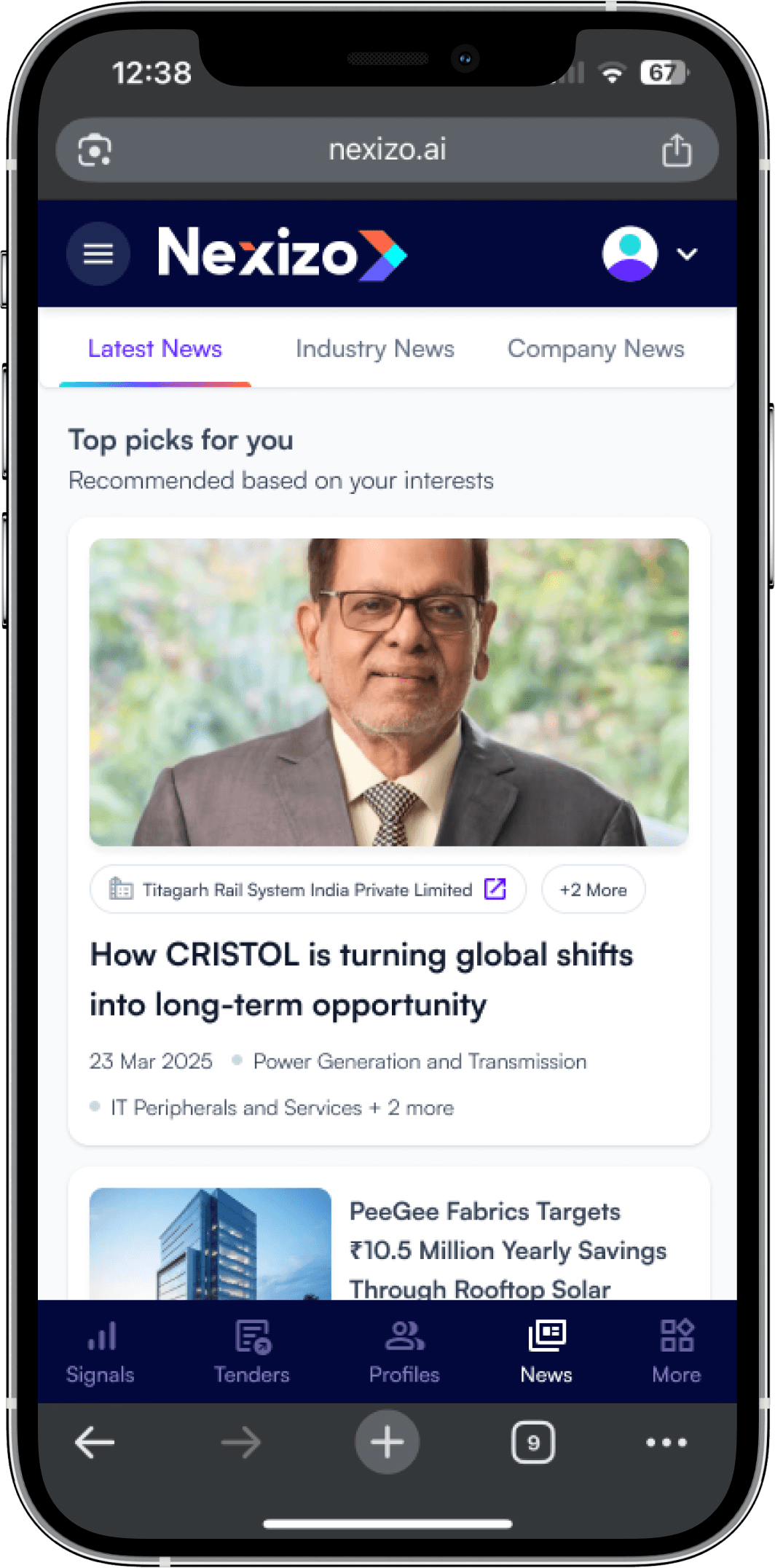
Iteration 01 — Static news section
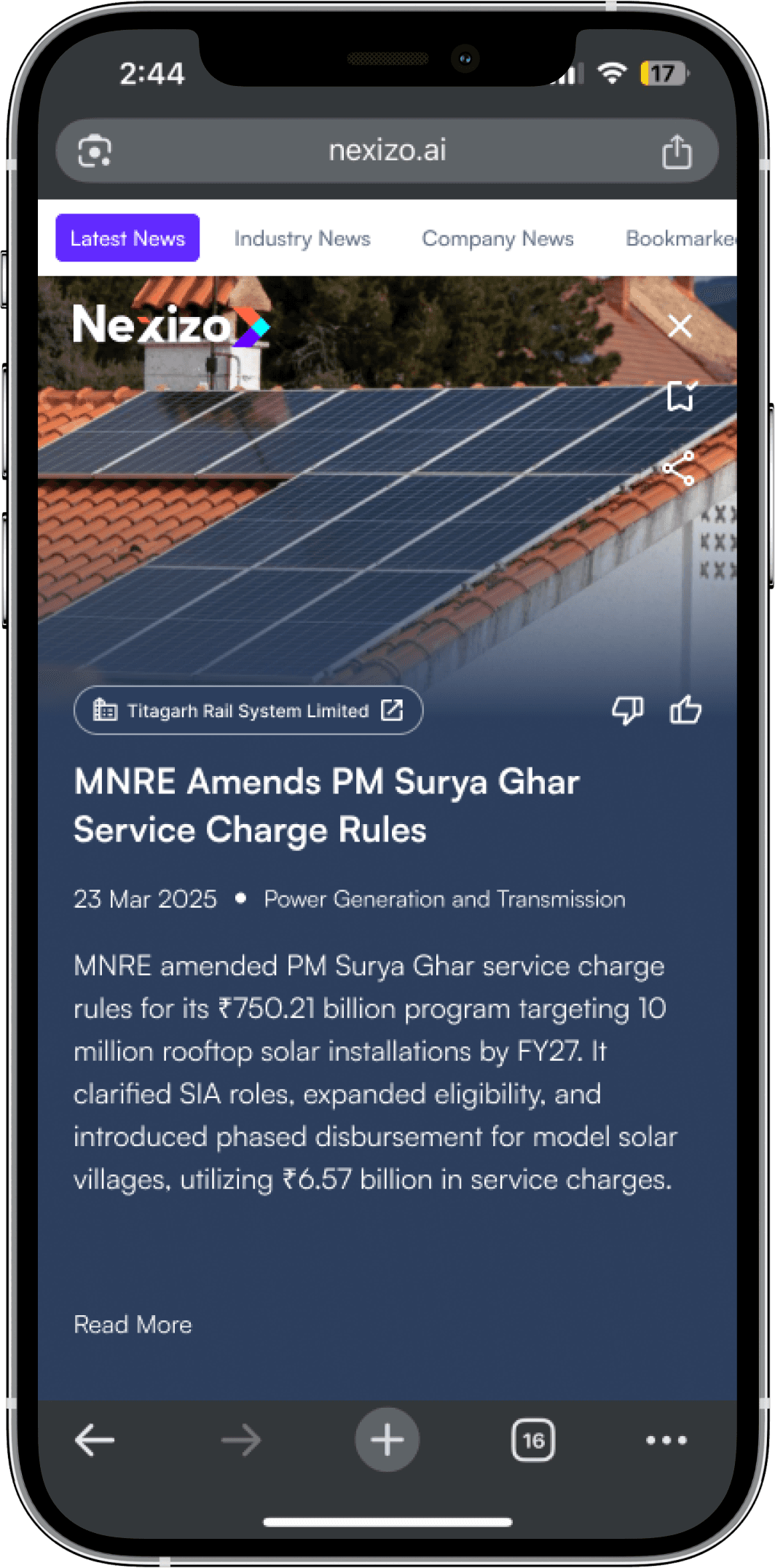
Iteration 02 — Feed exploration
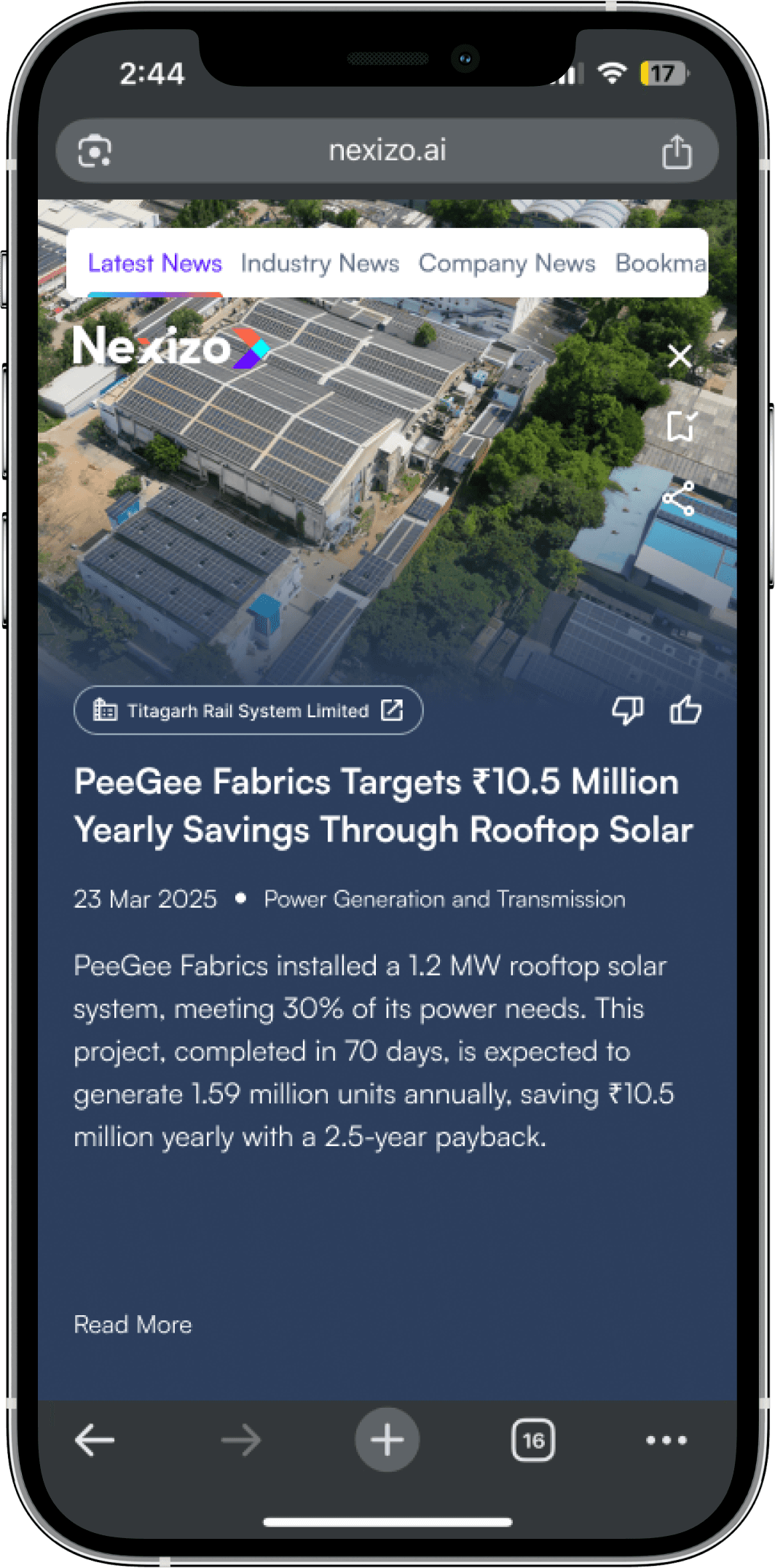
Iteration 03 — Refined feed model
Final Design
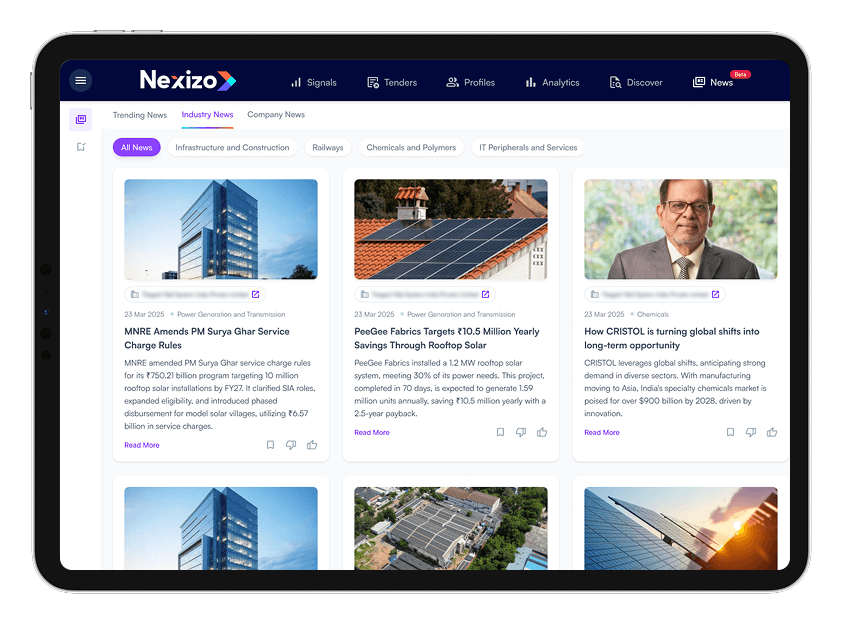
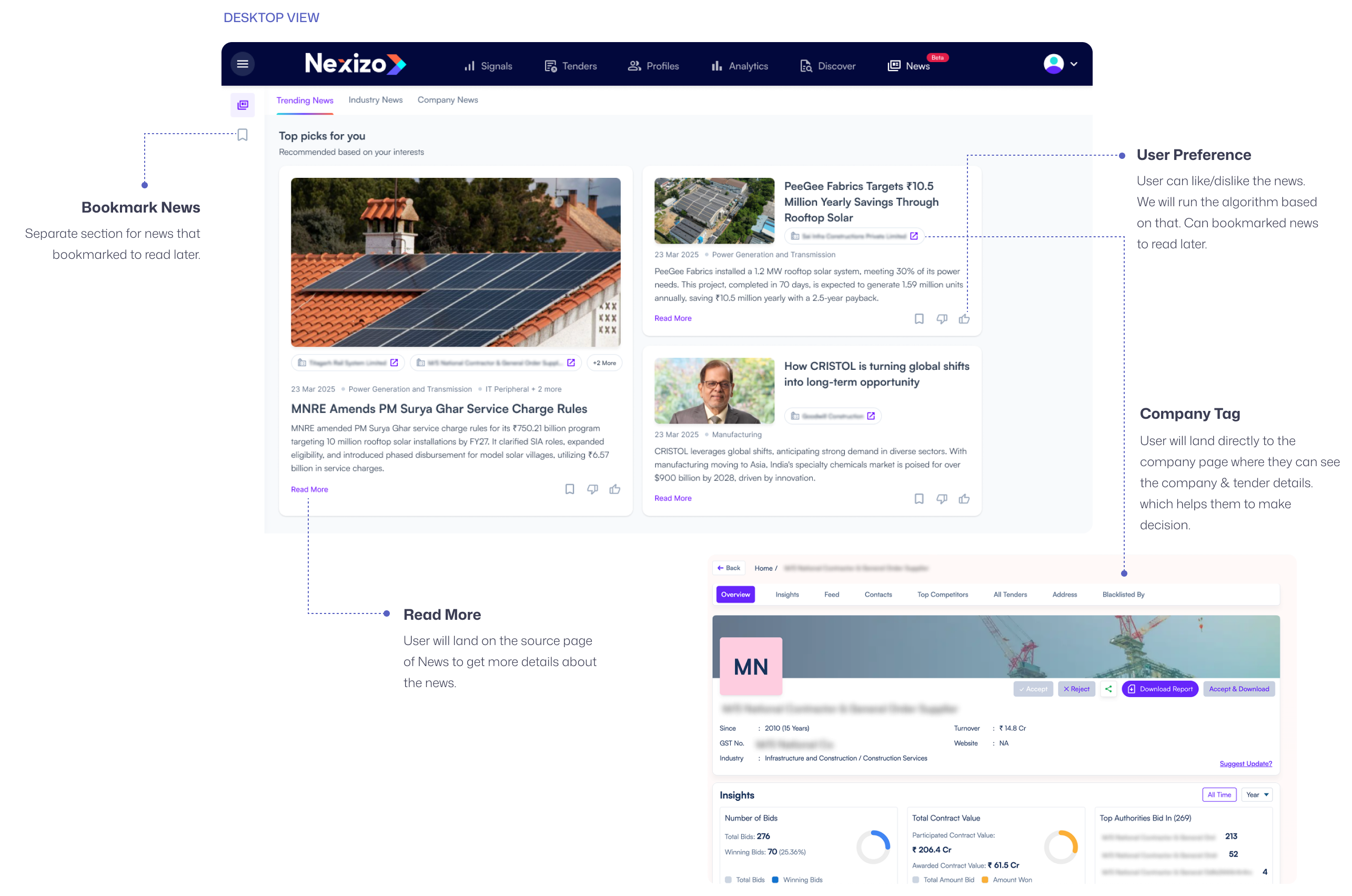
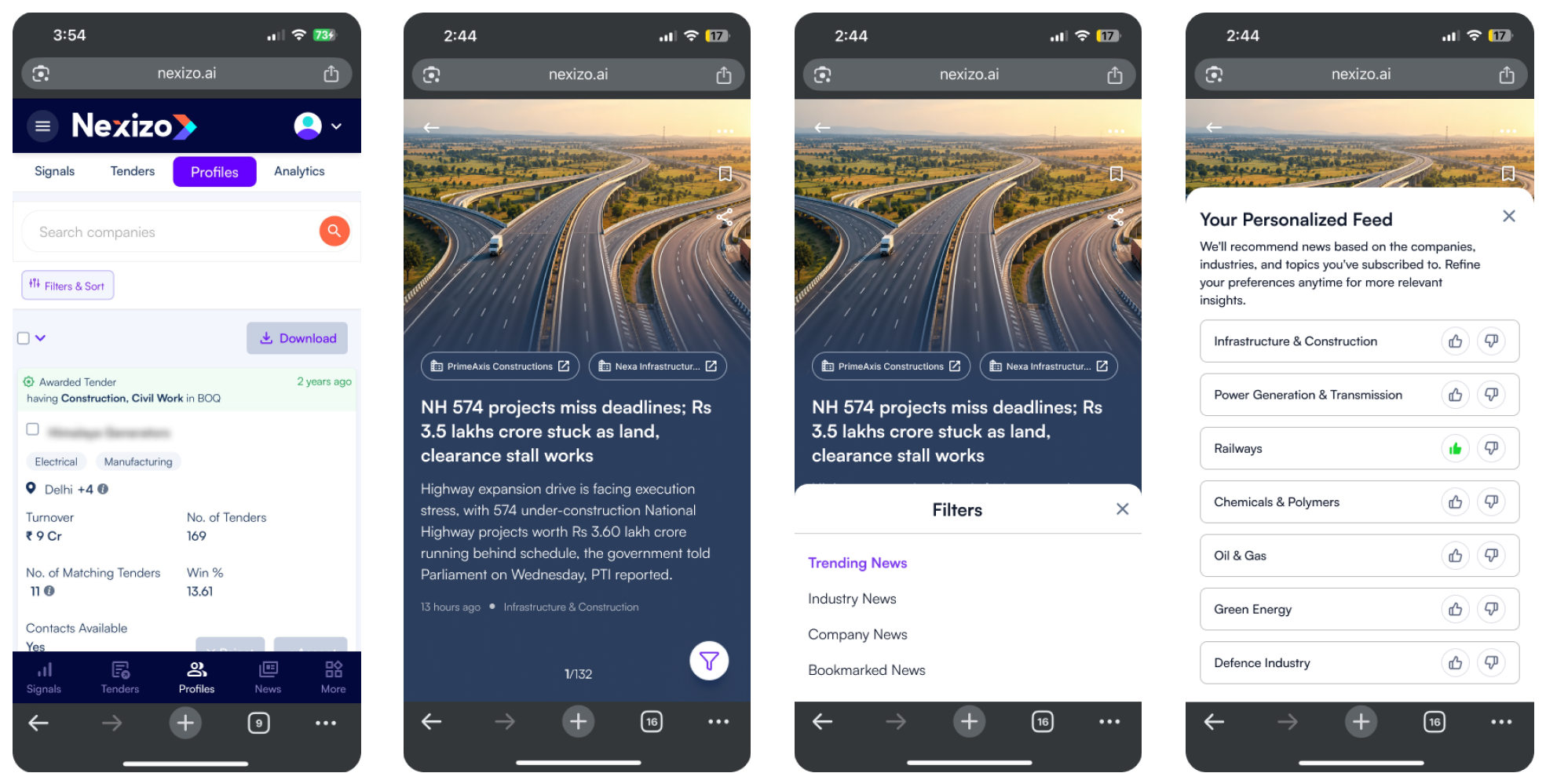
Designed a personalised News Feed
Designed the feed to match how each device is used — a single-column scroll for quick mobile browsing, and a multi-story layout on desktop for faster scanning and comparison.
Design Decision
Design decisions that turned aggregation into intelligence
- Shifted from a static news section to a continuously scrollable feed, matching how users actually browse rather than "look something up."
- Personalised the feed around each user's tracked industries, organisations, and tender interests, instead of showing one generic list to everyone.
- Surfaced sector and policy context directly alongside tenders, so bidding confidence no longer depended on leaving the platform to Google it.
- Made the feature exclusive to active subscribers, tying a clear, visible benefit to the paid tier instead of leaving subscription value implicit.
- Linked every news item back to the company and tender it affects, turning a passive read into an actionable next step.
Business Impact
These decisions moved real numbers, not just workflows
28-41%
Engagement & retention lift
18%
Subscription & revenue signals
12-16%
Increased tender engagement rate
Thanks for Reading